
High Fat Dog Food Guide: Your Ultimate Guide 2026
Do you have a dog that never seems to run out of energy? Then you may have wondered if high fat dog food could be the answer to your dog's needs. Proper nutrition is crucial for your four-legged friend to feel optimal and be able to live an active life.
In this guide, you will learn everything about high fat dog food for 2026. You will learn what it is, what benefits and risks there are, and how to choose the right food for your dog.
We explain when high-fat dog food is appropriate, which dogs benefit the most, what ingredients to look for, and what warning signs to watch out for. Let us help you make an informed choice for a healthier, happier dog.
What is high-fat dog food?
Understanding what high fat dog food means is crucial for choosing the right food for your dog. Generally, a dog food with over 18% fat is considered high fat dog food. Fat contributes more than twice as much energy per gram compared to protein and carbohydrates, which makes the food extra energy-dense. On the list of ingredients you will often find animal fats such as chicken fat, beef fat or salmon oil, which provide both energy and important fatty acids. The difference to regular food is clearly visible in the nutritional values and energy content. According to the FEDIAF 2025 nutritional guidelines for dog food , the balance between fat, protein and carbohydrates should always be considered for optimal health. The quality and origin of the ingredients is also central when choosing high fat dog food.
Definition and nutritional content
High fat dog food refers to food with a significantly higher fat content than standard food, often more than 18% on a dry matter basis. Fat is the nutrient component that provides the most energy and is therefore particularly important for dogs with high energy needs. The label states the fat content as a percentage, and it is important to compare different products to find the right level. Protein and carbohydrates are also present in the food but contribute less energy per gram. Animal fats such as chicken fat or salmon oil are common ingredients in high fat dog food and also provide essential fatty acids. High fat foods are often labeled as "energy" or "performance" and are aimed at active dogs.
Which dogs need high-fat dog food?
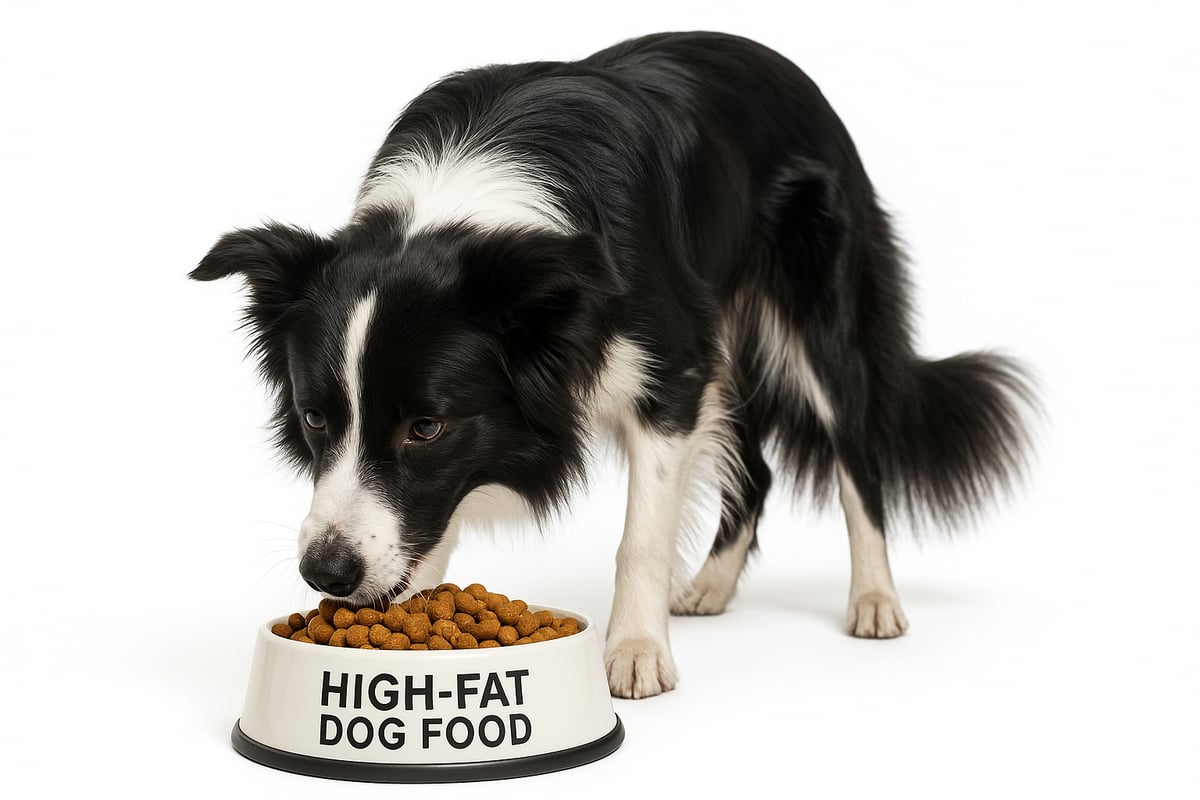
High fat dog food is best suited for dogs with high activity levels. Examples include hunting dogs, draft dogs, agility dogs and other sporting dogs that need a lot of energy to perform. Some breeds, such as border collies and huskies, have naturally high energy needs and can benefit from a high-fat diet. Young dogs undergoing intensive growth or individuals who have difficulty gaining weight may also need extra fat. Statistics show that the energy needs of active dogs can be up to three times higher than those of companion dogs. It is important to assess each dog individually before choosing a high fat dog food.
When should you avoid high-fat dog food?
There are situations where high fat dog food is not appropriate. Overweight or less active dogs are at risk of gaining even more weight if they are fed too much fat. Dogs with sensitive stomachs, pancreatitis or certain diseases may feel unwell from increased fat intake. Older dogs with lower metabolisms should also avoid foods that are too energy dense. An example is an older Labrador with a low activity level, where a high fat intake can lead to health problems. The veterinarian's recommendation is crucial if you are unsure whether high fat dog food is the right choice for your dog.
How does fat affect a dog's health?
Fat in high fat dog food acts as a powerful source of energy, especially for muscle work and endurance. Essential fatty acids in the food strengthen the skin, coat and immune system. Fat also helps the body absorb fat-soluble vitamins such as A, D, E and K. Dogs on a properly balanced fat diet can have improved coats and higher energy levels. Studies show that well-trained dogs on high fat dog food often have increased endurance, but too much fat can cause stomach problems or obesity. The balance between fat, protein and carbohydrates must always be adjusted to the dog's individual needs.
Benefits and Risks of High-Fat Dog Food
Choosing a high-fat dog food for your dog can have great benefits, especially for active and working dogs. At the same time, it is important to be aware of the risks and tailor the food to your dog's individual needs. Below, we will go over both the benefits and potential drawbacks, when it is the right choice and what warning signs you should pay attention to.
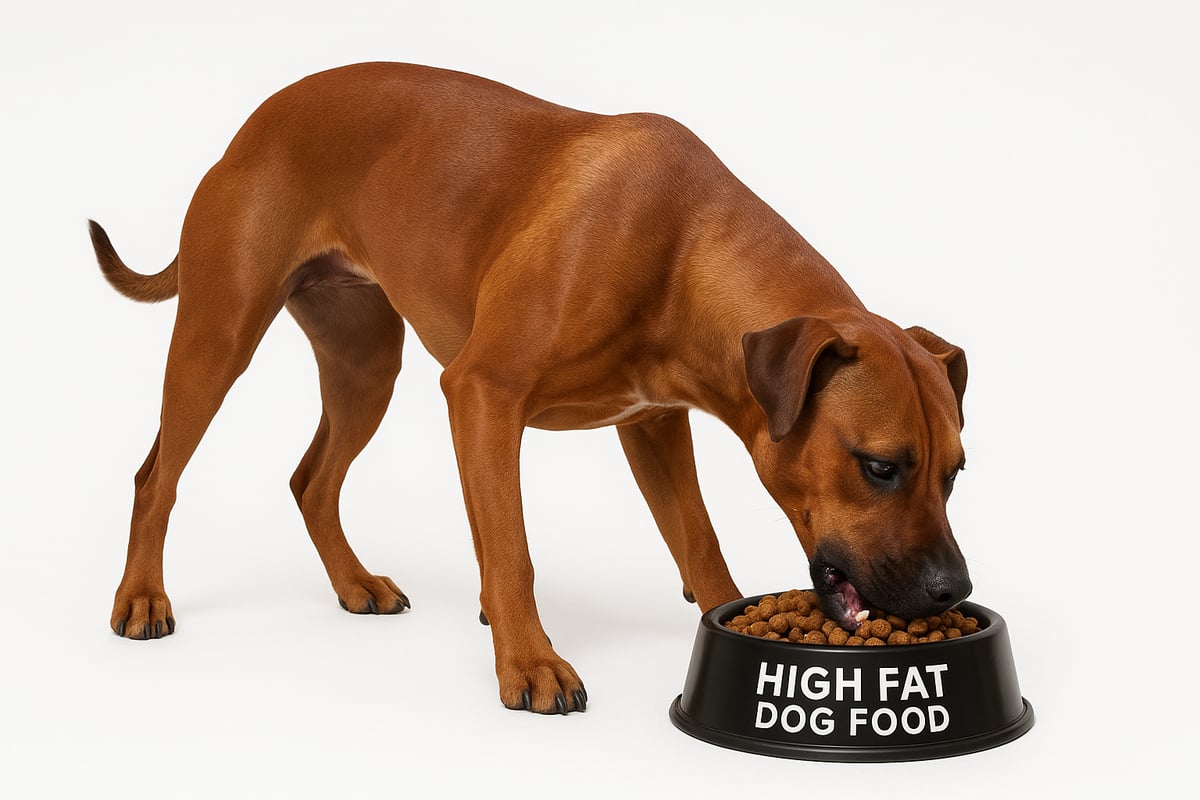
Benefits of high-fat dog food
High fat dog food offers several benefits for dogs with high energy needs.
- Provides quick and long-lasting energy for working and sporty dogs.
- Helps underweight dogs gain weight and build muscle.
- Supports coat shine and skin health thanks to essential fatty acids.
- Improves recovery after intense exercise or work.
- Can increase the appetite of picky dogs.
A clear example is sled dogs who need extra calories during the winter to perform at their peak. Studies show that dogs fed high fat dog food often achieve better endurance and faster recovery compared to those on standard food.
Below is a simple table of benefits:
| Advantage | Effect on the dog |
|---|---|
| Increased energy | Better performance |
| Weight gain | Stable hull |
| Shiny fur | Healthy skin |
| Appetite stimulant | Increased appetite |
High fat dog food can therefore be crucial for dogs that live an active life.
Risks and potential drawbacks
Despite the benefits, high fat dog food can pose some risks.
- Risk of overweight and obesity-related diseases if the feed is given in too large quantities.
- Increased risk of pancreatitis, especially in sensitive or older dogs.
- Digestive problems can occur if the feed is changed too quickly or if the fat intake is too high.
- Long-term overconsumption can negatively affect the liver and kidneys.
A common mistake is to feed the same high fat dog food to a small companion dog as to a working dog, which can lead to rapid weight gain. Statistics show that more than 50 percent of Swedish dogs are overweight, which underlines the importance of the right balance.
To avoid these problems, it is important to read up on the nutritional content and weigh the benefits against the risks. For more information on nutritional balance and ingredients, visit the Complete Nutrition Dog Food Info page.
When is high-fat dog food the right choice?
High fat dog food is the right choice in certain situations:
- When the dog has increased energy needs due to exercise, cold weather or the need to gain weight.
- If the dog has difficulty staying hungry despite large portions.
- After consultation with a veterinarian in case of specific medical conditions where higher energy is required.
An example is a hunting Labrador that works intensively during the fall season and therefore needs extra calories. Always adapt the food to the season and activity level, and make an individual assessment of the risks and benefits before switching to high fat dog food.
Warning signs and when to change food
There are several signs that high fat dog food may not be right for your dog.
- Sudden weight gain or weight loss.
- Signs of stomach upset, such as loose stools or vomiting.
- Lethargy, reluctance to eat or decreased appetite.
- Deteriorated coat or skin problems.
If you notice any of these warning signs, it is wise to contact your veterinarian and consider changing your dog's food. It is important to listen to your dog's signals and adjust the diet accordingly.
How to choose the right high-fat dog food
Finding the right high fat dog food for your dog starts with understanding their individual needs. Every dog is unique, and factors like activity level, age, health, and breed will influence which food is best. An active dog who gets a lot of exercise often needs more energy than an older or less active dog.
Assess whether your dog is underweight, normal weight or overweight. Observe body condition and energy level. Some breeds, such as pointers, require significantly more energy than an older terrier. Statistics show that energy needs can vary by up to 300% depending on activity level.
If in doubt, it is wise to consult a veterinarian before choosing high fat dog food.
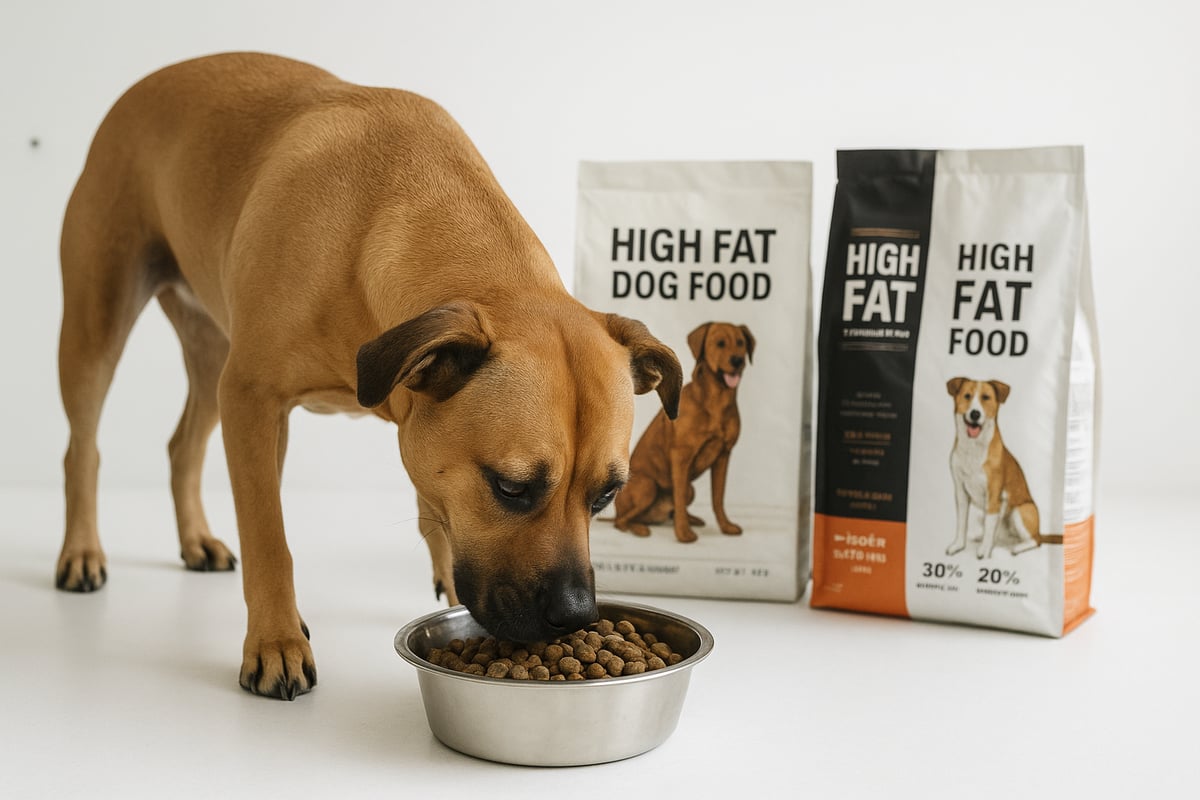
Step 1: Know your dog's needs
When choosing a high fat dog food, it is important to read and interpret the ingredients list carefully. Identify the fat sources used, such as animal fats such as chicken fat or salmon oil, and vegetable oils such as canola oil.
Look for omega-3 and omega-6 fatty acids, which are essential for skin and coat health. Avoid unnecessary additives and fillers. For example, compare salmon oil, which is rich in omega-3, with palm oil, which should be avoided.
Check the percentages on the label to ensure that the food is truly a high fat dog food. The quality and origin of the ingredients are crucial to your dog's health.
Step 2: Read and interpret the table of contents
Comparing different brands and products is an important step when looking for the right high fat dog food. Compare nutritional content, price, and quality. Popular brands in 2026 include Purina Pro Plan Sport, Diamond Naturals Extreme Athlete, Sportmix CanineX, and 4health Strive.
There are differences between dry food, wet food and fresh food. Some products reach up to 20-22% fat content, which is high compared to standard food. Taste and energy density vary between brands.
If you want to explore Swedish alternatives, you can see the range of Swedish-made dog food collection to find products with the right fat content and quality.
Step 3: Compare different brands and products
Once you have chosen your high fat dog food, it is important to adjust the amount of food to your dog's needs. Calculate the daily amount based on your dog's weight, activity level and season. Higher activity or colder weather may require an increased amount of food.
Divide meals to aid digestion, especially if higher in fat. Monitor your dog's condition through regular weighing and body condition assessment. Adjust the amount as needed to avoid weight gain or loss.
For example, you may need to increase the feed during winter training or reduce it during reduced activity. Adaptation is crucial for your dog to feel good on his high fat dog food.
Step 4: Adjust feed amount and feeding routines
Introducing a new high fat dog food requires patience. Make a gradual transition by mixing the new food with the old over 7-10 days. This will reduce the risk of stomach upset and loose stools.
Observe your dog's stool, energy level and appetite during the transition. Signs that the food is working include stable weight, shiny coat and alertness. If your dog develops loose stomach or other problems, discontinue the transition and contact your veterinarian.
Documenting changes and being observant will allow you to quickly discover if high fat dog food is right for your dog.
Important ingredients and labels to know
Choosing the right high fat dog food requires a good knowledge of both ingredients and labeling. The quality of fat and protein, additives and clear labels determine whether the food suits your dog's needs. Below you will get a structured overview of what to look for.
The best sources of fat for dogs
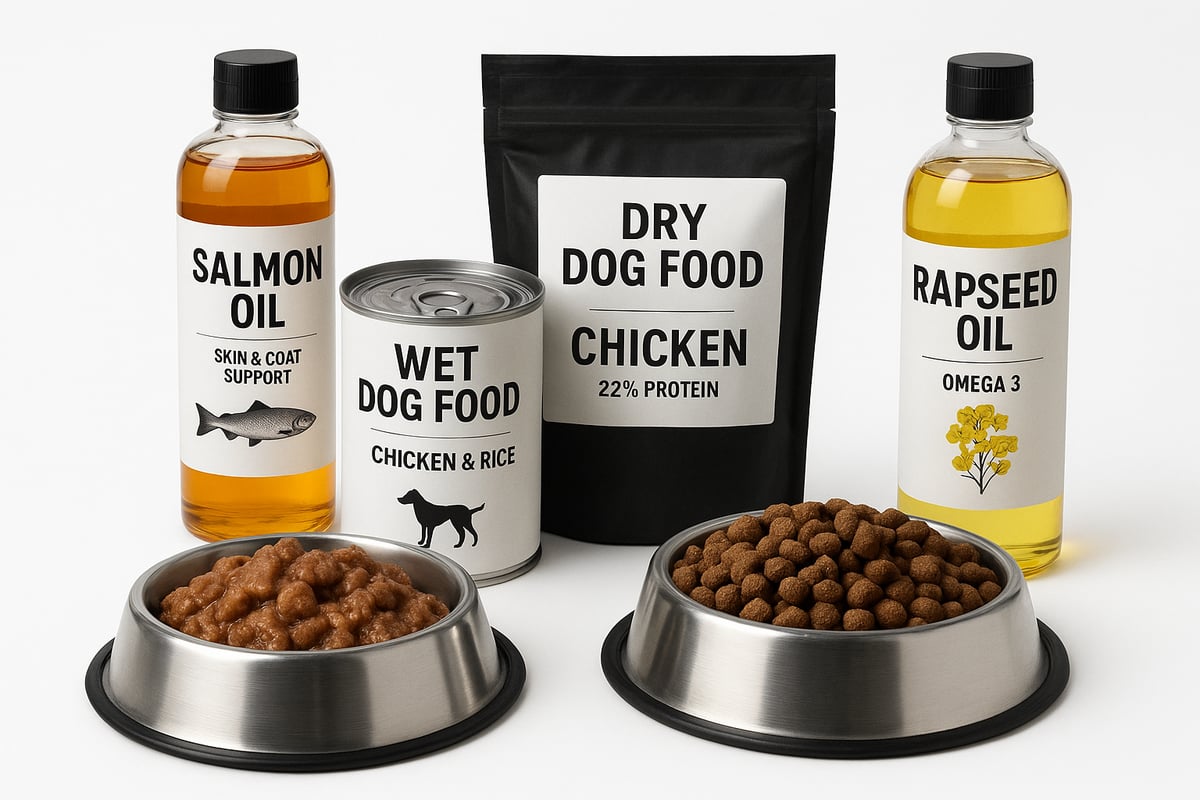
When choosing a high fat dog food, the origin and quality of the fat is crucial. Animal fats, such as chicken fat, beef fat and especially salmon oil, are easily digestible and rich in essential fatty acids. Salmon oil is known to strengthen the coat and skin, as well as support joints and the immune system.
Vegetable oils such as rapeseed oil and linseed oil can also be used, but in moderate amounts. Omega-3 and omega-6 fatty acids are important for your dog's health and should be present in the right proportions. Avoid cheap filler fats, such as palm oil, as they often lack nutritional value.
Quality and origin are always more important than just the amount of fat. Always read the packaging and choose high fat dog food with a clear declaration of the fat sources.
The role of protein together with fat
Protein and fat must be in balance for high fat dog food to be effective. For sporting and working dogs, a 30/20 formula (30% protein, 20% fat) is a common guideline. However, too much protein can put a strain on the kidneys in some sensitive dogs.
The quality of protein is just as important as the quantity. Animal protein sources, such as chicken, lamb and fish, provide high bioavailability. Combining the right levels of fat and protein will give your dog energy and build muscle without increasing the risk of obesity.
According to SLU's analysis of dogs' dietary needs, it is important to adjust the amount of fat and protein to the dog's lifestyle and activity level. This is especially true when choosing high fat dog food.
Additives, preservatives and grains
High fat dog food may contain various additives to increase shelf life or improve taste. Natural preservatives, such as vitamin E, are preferable to synthetic ones. Read the ingredients list carefully and avoid unnecessary additives and colorings.
Grain-free food can be suitable for dogs with sensitive stomachs, but it is not always necessary. Some dogs do well on grains such as rice or oats, while others need a grain-free high fat dog food. Always choose products with as few fillers as possible and with clear information about all ingredients.
Understanding the difference between different additives will help you make a safe and informed choice for your dog's health.
Labeling regulations and certifications
Labels like “premium,” “holistic,” and “natural” can be misleading if not backed up by clear certifications. FEDIAF and AFFCO certifications ensure that high fat dog food meets nutritional guidelines.
Origin labeling is also important. Swedish-made feed often has high traceability and clear labels. There are differences between EU and US labeling, so always compare the content and labeling when buying new feed.
Always choose products with transparent information and clear certifications to ensure that your high fat dog food is of high quality and safe for your dog.
High-fat dog food and long-term dog health
Using high fat dog food for extended periods requires careful monitoring and adaptation. The dog's health is affected both positively and negatively depending on how the food is used and what individual needs there are. Below is a review of the most important aspects to consider when it comes to long-term use of high fat dog food.
Effects on weight and body condition
The correct use of high fat dog food can help build and maintain optimal body condition, especially in active dogs. Fat provides high energy density, which makes it easier for the dog to get enough calories without large amounts of food. However, excessive intake can lead to obesity, which in turn increases the risk of joint problems and other diseases. Regular body assessment is crucial to detect changes in time. According tothe NPFA's work for safe dog food, it is important to choose products that are nutritionally balanced and safe for long-term use. Always adjust the amount of high fat dog food to the dog's current weight and activity level.
Fur, skin and immune system
One of the most obvious effects of high fat dog food is improved coat and skin quality. Essential fatty acids from animal and marine fat sources contribute to a shiny coat and elastic skin, while strengthening the immune system. Dogs that get the right amount of fat often have fewer skin problems and less itching. A problem-free coat is an indicator of good health and the right nutritional balance. It is important to choose food with high-quality fat sources and to avoid cheap filler fats. By observing the coat and skin, you can detect early on whether high fat dog food is having the desired effect or if adjustments are needed.
Digestion and energy levels
The digestive system is directly affected by the amount of fat in the food. High fat dog food provides quickly available energy, which is crucial for endurance and performance in working dogs. At the same time, too high amounts of fat can cause loose stools or stomach problems, especially if the transition is made too quickly. To stimulate the appetite and increase energy intake in picky or hard-working dogs, you can also use Dog treats and taste enhancers as a supplement. It is important to monitor both stool and energy levels when switching to high fat dog food, to ensure that the dog is well.
Risks of long-term use
There are some risks to consider when using high fat dog food for a long time. Excessive fat intake can negatively affect the liver and pancreas, and sensitive dogs can develop pancreatitis. Regular veterinary check-ups are recommended to detect any problems in time. Pay attention to signs such as vomiting, lethargy or stomach upset, which may indicate that the food is not suitable for your dog. It is wise to adjust the diet over time, especially as your dog ages or activity level changes. Long-term health requires balance, variety and a critical eye on your dog's well-being when using high fat dog food.
Frequently Asked Questions and Myths About High-Fat Dog Food
Choosing high fat dog food often raises questions and myths among dog owners. Here we clear up the most common misunderstandings and provide answers to the questions that often arise when it comes to high-energy food for dogs.
Myth: High-fat dog food is dangerous for all dogs
It is a common misconception that high fat dog food is harmful to all dogs. In reality, it is a matter of adapting the food to the dog's individual needs. Active sporting dogs, such as sled dogs or hunting dogs, can greatly benefit from the energy content of high fat dog food.
However, for low-activity companion dogs, such a diet can increase the risk of obesity. Statistics show that the majority of dogs can tolerate a moderate increase in fat in their diet, but it is important to always consult a veterinarian before making major dietary changes. By considering factors such as breed, activity level and health, you can avoid risks while still benefiting from the extra energy that high fat dog food offers.
Myth: More fat always provides more energy
Another myth is that the more fat the better for your dog’s performance and energy. High fat dog food does provide a lot of energy, but the balance between fat, protein and carbohydrates is crucial for health. If a dog gets too much fat without enough protein or carbohydrates, it can lead to fatigue, digestive problems or even decreased performance.
Dogs with high energy needs need the right composition, not just more fat. Research shows that excessive fat intake can reduce both appetite and work capacity. Therefore, it is important to choose a high fat dog food that is adapted to the dog's activity level and to always follow the manufacturer's recommendations for quantity and composition.
Question: Can you give high-fat dog food to puppies?
Puppies have special nutritional needs and their bodies are sensitive to imbalances. Feeding high fat dog food to puppies is only recommended if the food is specifically formulated for growing dogs and follows your veterinarian's guidelines. Too much fat during growth can increase the risk of obesity and negatively affect skeletal development.
It’s also important to consider the carbohydrate sources in the food. A study on grain-free dog food shows that the composition of nutrients can affect the long-term health of puppies. Therefore, always choose a puppy food with a balanced nutritional profile and consult your veterinarian for the right levels of fat and other nutrients.
Question: How do I know if my dog is doing well on a high-fat diet?
Signs that your dog is doing well on high fat dog food include a shiny coat, stable weight, good appetite and high energy. It is important to regularly check the consistency of the stool, the dog's body and activity level. If you notice negative changes, such as lethargy or skin problems, it may be time to adjust the diet.
To ensure that you choose a safe and high-quality high fat dog food, you can read more about the manufacturer's philosophy and quality requirements, for example at About Doghouse Nordic . Always document changes and consult a veterinarian at the slightest concern, so your dog has the best possible conditions for a long and active life.